 how-to
Does Stone Sealing Prevent Stains?
Last Updated: November 2, 2026
Quick Summary
Stone sealing slows liquid absorption by filling the tiny pores in natural stone, giving you time to wipe up spills before they become stains. It is stain resistance, not stain prevention, so a sealed countertop can still stain if oil sits on it overnight. Sealer buys time; it does not make stone stain-proof.
- Penetrating sealer soaks into stone and leaves no film, making it the standard choice for countertops and floors.
- The water test tells you in about 15 minutes whether your stone needs sealing.
- Kitchen countertops typically need resealing every 1-2 years, checked with a water test every 3-6 months.
- Do not seal a stone that still has an active stain, since sealer can lock the stain in.
- Marble and limestone are highly porous and acid-sensitive, so sealing is close to essential for them.
Table of Contents
- How Stone Sealing Reduces Liquid Absorption
- Does Sealing Prevent Every Stain?
- How to Test If Stone Needs Sealing
- Best Sealer for Natural Stone Countertops
- How Often to Seal Natural Stone
- How to Remove Stains From Natural Stone
- Which Stones Benefit Most From Sealing
- Schedule Your Professional Stone Sealing Assessment
- Frequently Asked Questions
How Stone Sealing Reduces Liquid Absorption
Stone sealing works by filling the tiny pores in natural stone so liquids stay on the surface instead of soaking in. A good sealer slows absorption, which buys you time to wipe up spills before they become stains.
Natural stone is porous. Granite, marble, and limestone all contain microscopic channels that draw in water, oil, and food. Once a liquid gets below the surface, it spreads sideways and sets.
That is the whole job. Nothing more.
Penetrating Versus Surface Sealers
Penetrating sealer soaks into the stone and leaves no film. It is the standard choice for countertops and floors because it lets the stone breathe.
Surface sealer sits on top and forms a coating. It can look shiny, but it wears, scratches, and can peel in high-traffic spots.
Penetrating sealers are commonly used for natural stone countertops because they do not form a film on the surface.
Does Sealing Prevent Every Stain?
No. Sealing is stain resistance, not stain prevention. The word "prevent" oversells what a sealer can do. A sealer slows absorption and gives you a window to wipe up spills, but it does not make stone stain-proof.
Here is the honest version: a sealed countertop can still stain if oil sits on it overnight. Acidic spills can still etch marble. A sealer buys time, and sometimes time is all you need.
Stain Resistance Versus Stain Prevention
Stain resistance means the stone pushes back against a spill. Stain prevention means the spill never gets in at all. Only a non-porous surface like quartz or glass truly prevents stains.
Natural stone is porous. You cannot make it non-porous without changing its character. So the goal is resistance plus fast cleanup:
- Wipe up spills within minutes, not hours
- Blot oil, do not wipe it around
- Use coasters and trivets under hot or oily items
Watch out: leaving a cooking oil spill on sealed granite overnight can still leave a dark mark. Sealer slows absorption. It does not stop oil from eventually working in.
How to Test If Stone Needs Sealing
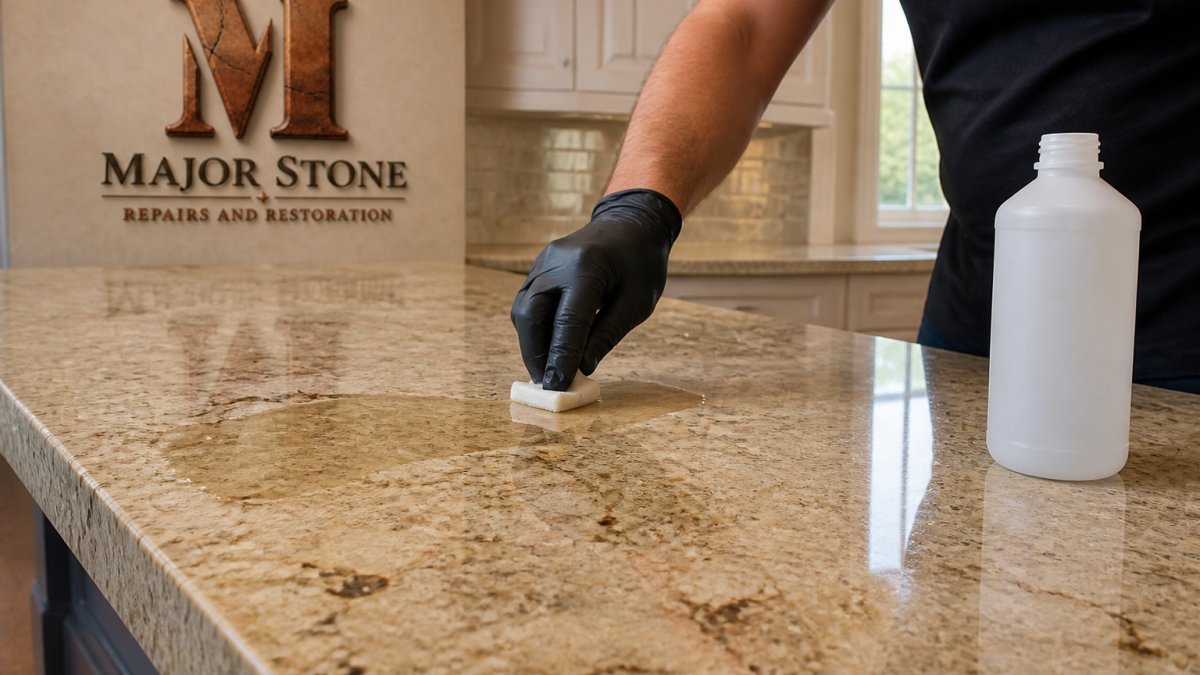
The water test tells you in about 15 minutes whether your stone needs sealing, and any homeowner can do it.
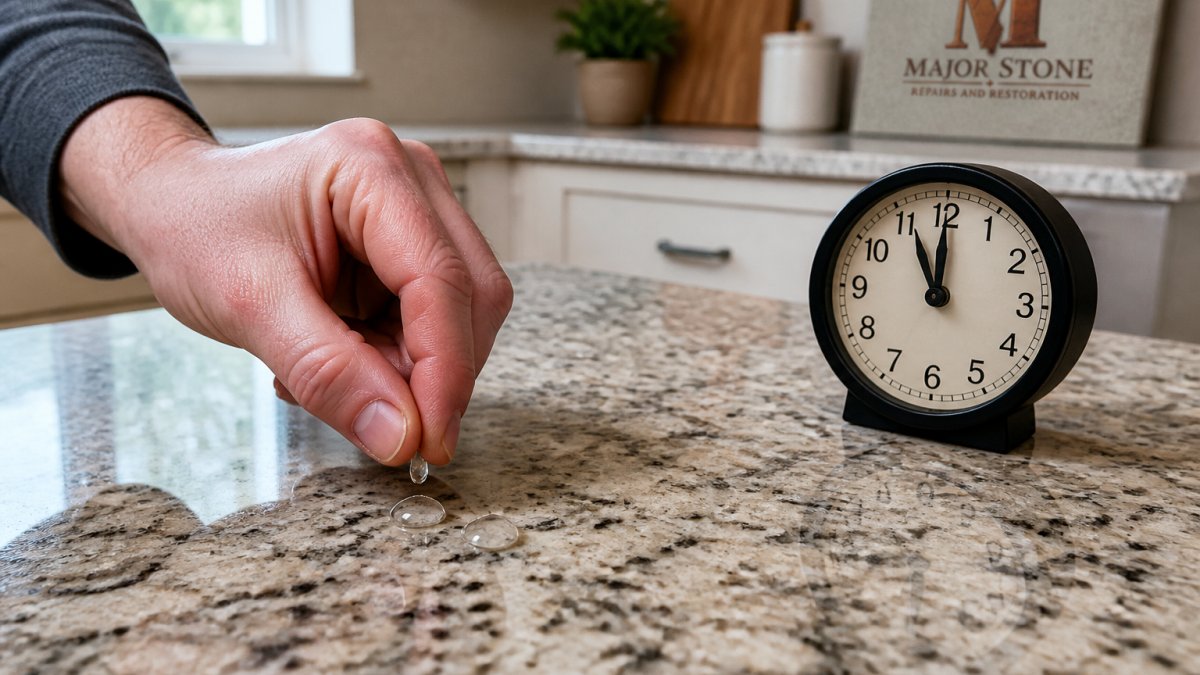
Here is the test step by step:
- Clean the surface and let it dry fully.
- Drip a few drops of water on the stone.
- Watch the clock for 10 to 15 minutes.
- Check whether the drops still bead on top.
- Check whether a dark ring forms under the drops.
If the water beads and sits, your sealer is working. If the drops spread flat or darken the stone, it is time to reseal. A dark spot under the drop means liquid is getting in.
Do this test every few months on high-use areas like kitchen islands and bathroom vanities.
Best Sealer for Natural Stone Countertops
A penetrating or impregnating sealer formulated for the specific stone type is generally a sound choice for natural stone countertops.
Start by identifying the stone and its finish. Honed and polished surfaces take sealer differently, and textured or brushed finishes hold more product and need more careful wiping. Then choose a product whose label lists your stone type or a compatible mineral family.
Matching the Sealer to the Stone
Porosity drives the decision more than brand. Here is how the common countertop materials compare:
- Marble and limestone: Calcium-based and acid-sensitive. Use a penetrating sealer rated for calcareous stone, and avoid any product with acidic components. These stones also etch, and no sealer prevents etching.
- Granite: Absorption varies slab to slab. Many granites take a general penetrating sealer well, but dense, polished slabs may absorb very little. Test a hidden spot before treating the whole top.
- Quartzite: Dense and hard, but most quartzite still benefits from a penetrating sealer because natural fissures and pores can wick liquid. Use a product rated for dense natural stone.
A common pattern is to assume every granite behaves the same. Two slabs from the same quarry can absorb liquid at different rates, so test each surface before you commit to a product.
Water-Based Versus Solvent-Based Sealers
Both families work, but they trade off differently:
- Water-based sealers are lower odor, easier to clean up, and friendlier for indoor kitchens. They generally need longer to cure and may require a second coat on porous stone.
- Solvent-based sealers can penetrate very porous or dense stone more deeply and often cure faster. They carry stronger fumes, so ventilate the room and follow the label's safety instructions.
For food-contact surfaces such as countertops and islands, choose a product labeled for food-preparation areas and let it cure fully before use. Follow the product's label for curing time before the surface is used.
Compatibility and Finish Checks
Before treating a whole countertop, run a small test in an inconspicuous spot, such as under an overhang or inside a cabinet opening. Apply the sealer, let it cure, and check for color shift, haze, or a change in sheen.
Watch out: be cautious with sealers that form a film on natural stone, since a trapped film can hold moisture and peel in high-traffic spots.
What to Look For on the Label
- A stone type or mineral family match
- Indoor or food-contact suitability where relevant
- Coverage rate so you buy enough for two coats
If a product's label does not name your stone or give a coverage rate, treat that as a reason to keep looking rather than a reason to guess.
How Often to Seal Natural Stone
The resealing interval depends on the stone, the sealer, and how hard the surface works. Floors and high-traffic surfaces may need it more often.
A busy kitchen island wears its sealer faster than a guest bathroom vanity. A porous limestone shower floor wears it faster than a sealed granite bar top. When it is time, follow a step-by-step guide to restore dull granite countertops and reseal for lasting shine.
A simple resealing schedule:
| Surface | Typical Reseal Interval | Check With |
|---|---|---|
| Kitchen countertops | Every 1-2 years | Water test every 3-6 months |
| Bathroom vanities | Every 2-3 years | Water test every 6 months |
| Stone floors | Every 1-2 years | Water test on high-traffic paths |
| Outdoor stone | Every 1-2 years | Water test after each season |
How to Remove Stains From Natural Stone
Removing a stain from natural stone starts with identifying what spilled and whether the stone is sealed. Oil, water, and food stains each need a different approach, and the wrong method can drive a stain deeper or damage the finish. For more how-to guides on stone care, browse our articles. This is also where sealing and stain removal intersect: a sealer slows absorption, but it does not make an existing stain disappear, and sealing over a stain can trap it under the surface.
Identify the Stain Before You Treat It
- Oil and grease: Dark, soft-edged patches that often appear after cooking. They do not fade on their own and usually need a poultice.
- Water and mineral rings: Light or dark rings that may fade as the stone dries. A poultice with a solvent can speed the process.
- Organic food and wine: Colored marks that sit near the surface. Blot first, then poultice with a mild stone cleaner.
Poultice Basics
Watch out: do not seal a stone that still has an active stain. Sealer can lock the stain in and make later removal harder. Remove the stain first, let the stone dry completely, then reseal.
What Not to Use
- Vinegar or lemon juice, which etch calcium-based stone
- Bleach or ammonia cleaners, which can discolor stone and degrade sealer
- Abrasive scrubbing pads, which scratch polished surfaces
- Generic all-purpose sprays, which may leave residues or strip sealer
The U.S. EPA Safer Choice program is a useful starting point for finding gentler household cleaners.
When Sealing Helps and When It Does Not
Sealing helps most before a spill happens. On a properly sealed countertop, a spill stays on the surface longer, giving you time to blot it up before it becomes a stain. Once a stain has set, sealing does nothing to remove it. If a stain will not lift after two poultice rounds, call a professional. Deep-set stains can be pulled with stronger methods, and a pro can tell the difference between a stain and etch damage.
Which Stones Benefit Most From Sealing
Porous stone benefits most from sealing. That means limestone, sandstone, and certain marbles and granites top the list. Dense stone like polished granite and quartzite benefits too, but it resists stains longer on its own.
Here is how the main stone types stack up:
- Marble and limestone: Highly porous and acid-sensitive. Sealing is close to essential.
- Granite: Varies by slab. Some granites are dense, others are quite porous. Test yours.
- Quartzite: Dense and tough, but still benefits from a penetrating sealer.
- Slate and sandstone: Porous and often textured. Sealing helps a lot.
A common mistake is assuming all granite behaves the same. Two slabs from the same quarry can absorb liquid at different rates. Test each surface before you decide.
Schedule Your Professional Stone Sealing Assessment
A professional assessment can remove much of the guesswork by testing the stone and checking sealer performance.
Mobile service that comes to your location is available, so heavy slabs do not need to be transported. Crack and chip repair and Dry-Treat premium sealer application are among the services offered on site.
You can explore our stone repair and restoration services or contact us to set up a visit.
Frequently Asked Questions
How often should I apply stone sealer?
Most natural stone needs resealing every one to three years, but the right interval depends on the stone type, the sealer, and how much traffic the surface sees. High-use kitchen countertops and entryway floors often need attention sooner than a lightly used fireplace surround. Rather than following a fixed calendar, test with a few water droplets every few months. If water no longer beads and starts to darken the stone within minutes, it is time to reseal.
Does stone sealer prevent every type of stain?
No. Stone sealing slows liquid absorption and gives you time to wipe up spills, but it does not make stone stain-proof. Oils, wine, coffee, and acidic foods can still leave marks if left sitting, and acidic substances can etch marble and limestone regardless of sealer. Think of sealing as stain resistance, not stain prevention. Prompt cleanup and a quality penetrating sealer together deliver the best protection, which is why professional application matters.
How can I tell if my stone countertop needs sealing?
Place a few drops of water on an inconspicuous area and wait 10 to 15 minutes. If the water beads on the surface, the sealer is still working. If the stone darkens or the water soaks in, the sealer has worn thin and it is time to reseal. For oil-prone stones like granite, you can repeat the test with a drop of cooking oil. A professional assessment can confirm the result and recommend the right sealer.
What should I do if a stain appears on sealed stone?
Blot the spill immediately with a clean cloth and avoid scrubbing, which can push the stain deeper. For oil-based stains, a poultice made from baking soda or diatomaceous earth and a solvent can draw the mark out over 24 to 48 hours. Water-based stains often lift with a poultice of paper towels and distilled water. If the stain persists or the stone is etched, call a stone care professional rather than trying stronger chemicals.
Stone sealing is not a magic shield. It is a smart layer of defense that buys you time, and time is what stops most stains. If you want your countertops, floors, or fireplace stone protected the right way, get a free estimate from Major Stone Repairs and Restoration. We will test your stone, match the sealer to the surface, and apply it with an accredited touch and a performance warranty behind it.