 blog
7 Things to Know in a Marblelife vs Stoneshine Comparison
Last Updated: November 4, 2026
Quick Summary
A marblelife vs stoneshine comparison comes down to the local franchise crew, not the national logo, since both are franchise networks of independently owned businesses. Compare written line items, not totals: confirm on-site assessment, named sealer and warranty, repair scope, and finish before booking.
- Results depend on the local crew, not the logo, so judge each location on its own work.
- Pricing depends on quantity, stone condition, and access, so there is no single price to compare.
- On-site assessment catches cracks, etch marks, and prior sealant problems that a photo can hide.
- A phone quote far below an in-person quote usually means the first number was a placeholder.
- A pH-neutral stone soap diluted in warm water with a soft microfiber mop is a common approach for marble floors.
Table of Contents
- Marblelife vs Stoneshine: How the Two Franchise Models Compare
- Marblelife vs Stoneshine Comparison Cost: What Drives the Price
- Service and Material Coverage: Marble, Granite, Travertine, and Concrete
- The Best Floor Cleaner for Marble: What to Use and What to Avoid
- How to Remove Hard Water Buildup on Marble Without Etching the Surface
- Credentials, Licensing, and Warranty Proof to Request Before Booking
- Get a Free On-Site Estimate for Your Stone Restoration
- Frequently Asked Questions
Marblelife vs Stoneshine: How the Two Franchise Models Compare
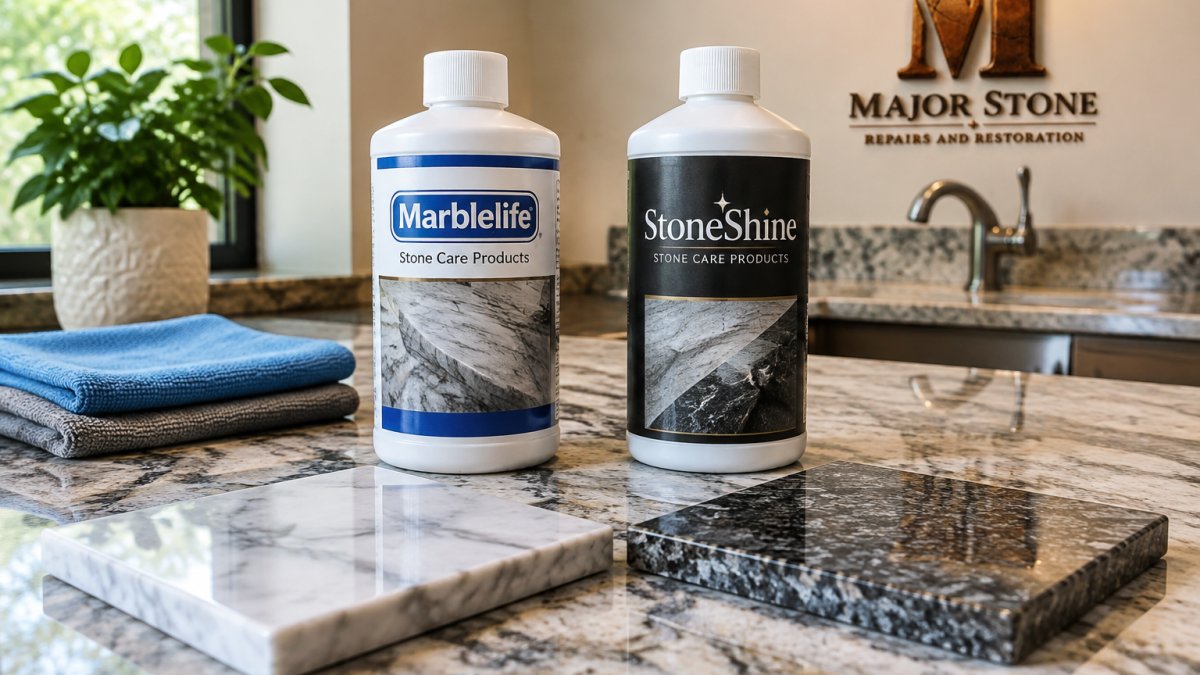
A marblelife vs stoneshine comparison starts with one fact most homeowners miss: both are franchise networks, not single companies. That means the crew that shows up at your door is an independently owned local business operating under a national name. At Major Stone Repairs and Restoration, we have spent over 20 years restoring stone and quartz, and we have watched plenty of homeowners assume a national logo guarantees a national standard. It does not.
Here is what actually decides your outcome.
The Franchise Structure Behind Each Brand
That distinction matters. Results depend on the local crew, not the logo, so judge each location on its own work.
What Actually Varies Location to Location
Availability is the first question, since not every location serves every address. Ask each local provider directly about its coverage.
Marblelife vs Stoneshine Comparison Cost: What Drives the Price
Pricing for stone restoration depends on quantity, stone condition, and access, so there is no single price to compare. What you can compare is the method behind the number and the line items that should appear on any written estimate. A quote that hides those line items is the one to question.
The Cost Drivers That Move Every Quote
Most stone restoration estimates are built from the same handful of variables. Ask each local office how it weights them, and you will see quickly whether the quote is a real assessment or a square-footage guess:
- Surface area and layout. A 200-square-foot open marble floor is faster to polish than the same square footage split across three bathrooms, a hallway, and a threshold. Grout lines, edges, and tight corners add labor.
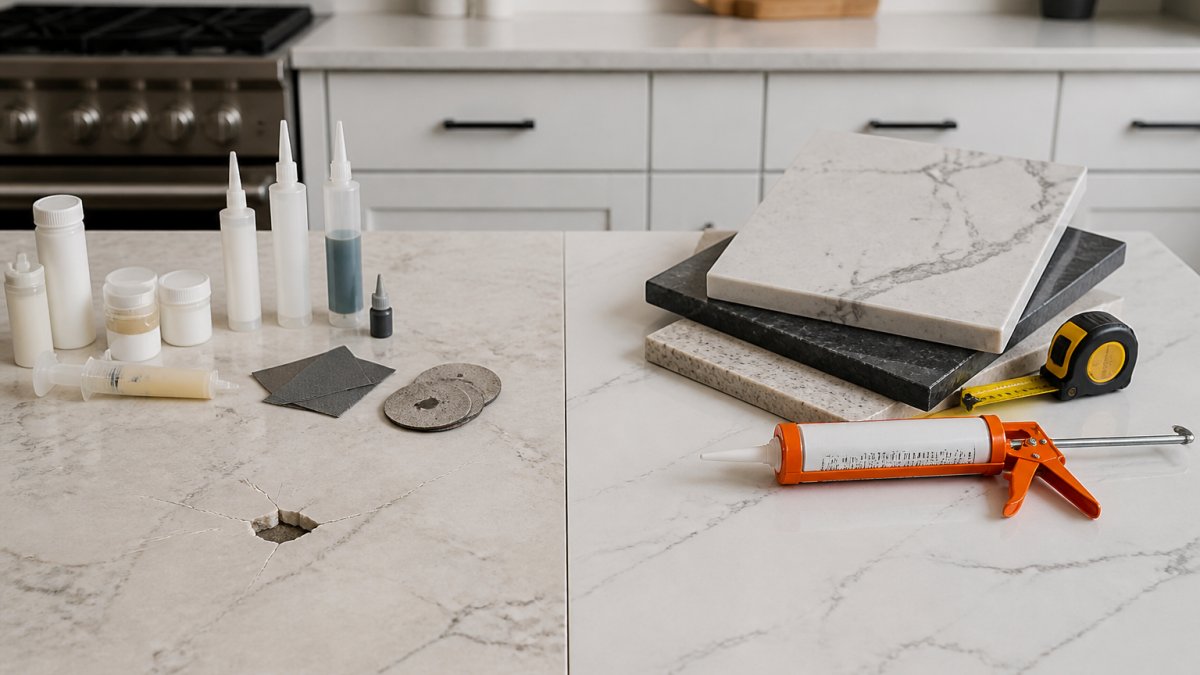
- Stone condition. Light surface dullness is a polish job. Deep scratches, chips, cracks, and etch marks require grinding, filling, or spot repair before polishing, and each step adds time and material.
- Stone type. Marble, travertine, limestone, and terrazzo respond differently to abrasives and acids. A crew that has to switch pads and compounds mid-job charges for that.
- Access and protection. Stairs, elevators, furniture moving, and floor protection for adjoining rooms all affect labor hours. A ground-floor open-plan kitchen is cheaper to work in than a third-floor bathroom with a narrow door.
- Sealer and finish. A penetrating sealer such as a DryTreat application is a separate line item from polishing. So is a honed versus polished finish, or a matte versus high-gloss look.
- Repair scope. Crack and chip repair, grout replacement, and caulk renewal are often quoted separately because they are separate trades within the job.
Estimate Methodology: Flat Quotes vs On-Site Assessment
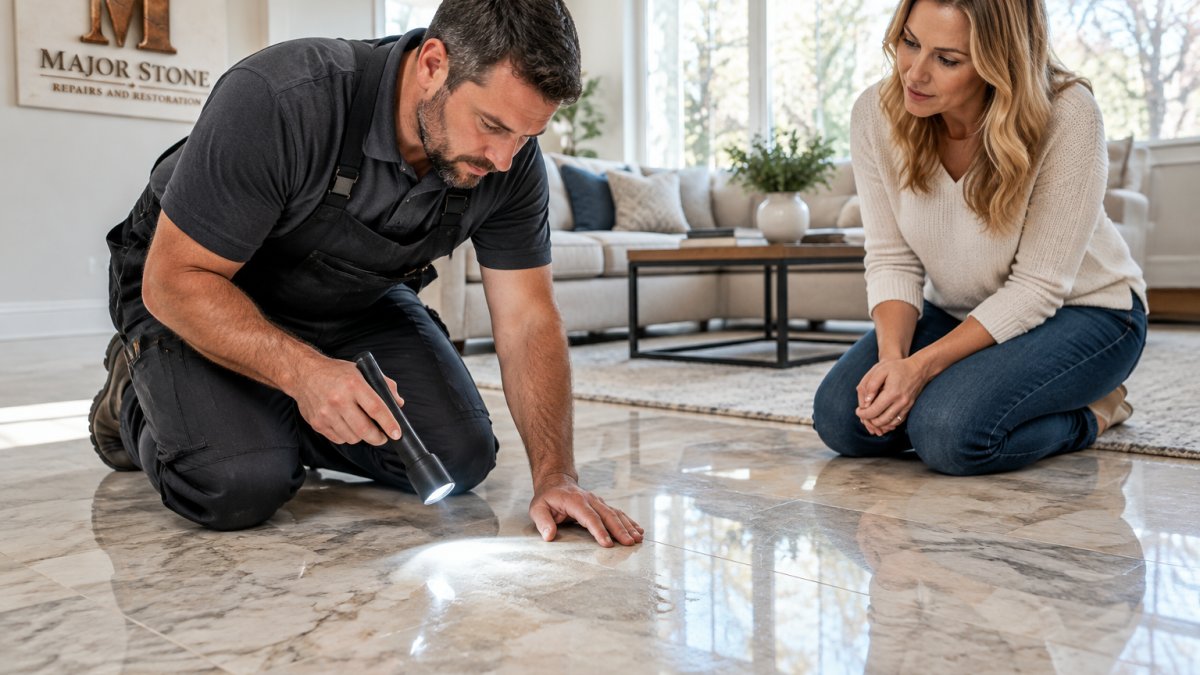
Estimates may be given from photos or square footage, or after an in-person assessment. On-site assessment catches cracks, etch marks, and prior sealant problems that a photo can hide. Ask directly which method a provider uses before you book.
Watch out: a phone quote that is dramatically lower than an in-person quote usually means the first number was a placeholder, not a price. Get the assessment method in writing before you schedule.
How to Read a Written Estimate Line by Line
A transparent estimate separates labor, materials, sealer, and repair. It states the finish (honed, polished, or matte), the sealer product and warranty terms, and what is excluded. If the quote is a single lump sum with no breakdown, ask for the line items. A local operator who cannot explain the breakdown is either guessing or padding.
The Upfront Fee and Royalty Model Franchisees Operate Under
If budget is tight, weigh repair against replacement with our guide on repairing vs replacing kitchen countertops.
What to Ask Before You Compare Two Quotes
When you put a Marblelife quote next to a Stoneshine quote, compare like with like. Confirm both include on-site assessment, both name the sealer and its warranty, both list repair scope separately, and both state the finish. A lower number that omits sealing or repair is not a lower price for the same job. Ask each office for the written scope and warranty terms, then compare the line items, not the totals.
Every stone restoration quote is built from the same handful of variables, so compare how each local office weights them.
| Cost driver | What moves the quote |
|---|---|
| Surface area and layout | Grout lines, edges, and tight corners add labor |
| Stone condition | Deep scratches, chips, cracks, and etch marks add steps |
| Stone type | Marble, travertine, limestone, and terrazzo respond differently |
| Access and protection | Stairs, elevators, furniture moving, and floor protection add hours |
| Sealer and finish | Penetrating sealer and honed versus polished finish are separate |
| Repair scope | Crack and chip repair, grout replacement, caulk renewal quoted separately |
Service and Material Coverage: Marble, Granite, Travertine, and Concrete
Coverage varies by provider, so confirm which surfaces and repairs a provider handles before booking. The comparison that matters is not the brand name on the van but the specific service list the local operator will put in writing.
The Core Restoration Tasks to Compare
Stone restoration covers a range of tasks. Ask any provider which of these it performs in-house versus subcontracts or declines:
- Grinding and honing to remove deep scratches, lippage, and uneven seams.
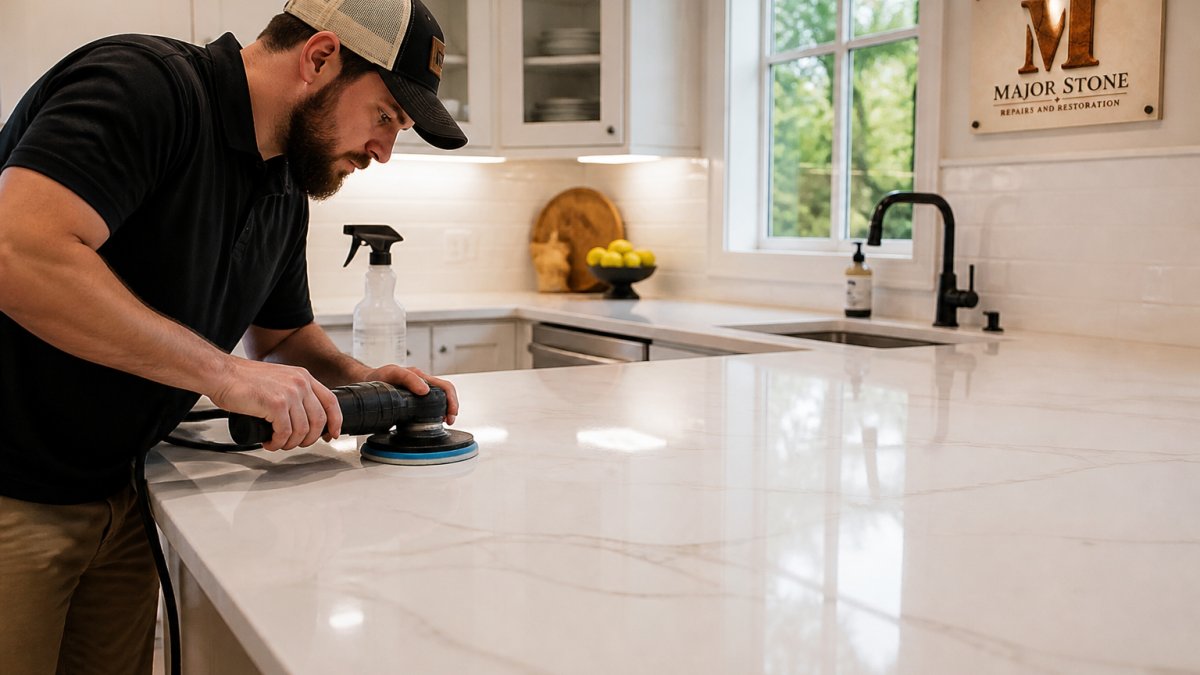
- Polishing and re-polishing to restore shine and surface clarity.
- Etch removal on marble and travertine, which requires re-polishing rather than cleaning.
- Crack, chip, and seam repair, including color-matched epoxy fills.
- Grout cleaning and replacement on tile and stone floors.
- Sealing, including penetrating sealers with a stated warranty.
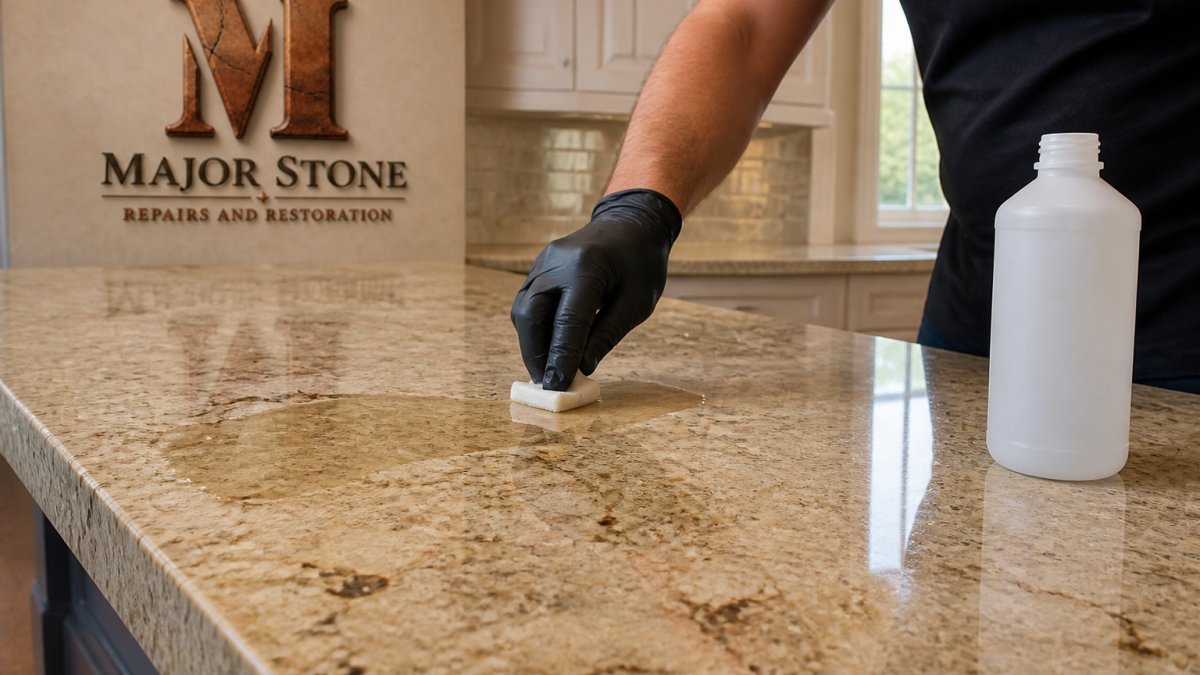
- Hard-water and calcium stain treatment, which is a poultice and re-polish job, not a cleaning job.
- Bathroom and shower restoration, including shower floors, walls, and thresholds.
- Countertop and floor services, including kitchen and bath vanities.
A location that lists polishing but not crack repair will hand you a different outcome than one that does both. Get the list in writing.
Stone Types: Where Coverage Usually Diverges
Different stones respond differently to abrasives and acids. Ask about the specific surface you own, not stone care in general.
A practical test: describe your surface and the damage in one sentence, then ask the provider to name the method it would use. A specific, described process is a better sign than a general promise.
How to Verify a Local Operator's Coverage Before Booking
A service list on any website is not proof of what a local operator does. Verify in three steps:
- Confirm the address is served. Ask the local office directly whether it covers your address, and get the service-area boundary in writing.
- Request the local service list. Ask for the specific tasks and stone types the location handles in-house, not the brand's national list.
- Ask for recent project examples. Request before-and-after photos of the same surface type and damage you have, and ask when the work was done.
Watch out: a website listing a service does not guarantee the provider offers it. The written list you receive is the one that counts.
Why Depth Beats Breadth
A long service list is less useful than a deep one. Match the provider's depth to your surface, and ask for proof of that specific work before you book.
The Best Floor Cleaner for Marble: What to Use and What to Avoid
A pH-neutral stone soap diluted in warm water, applied with a soft microfiber mop, is a common approach for marble floors. Acidic cleaners can strip polish and leave etch marks.
Avoid these on marble and travertine:
- Vinegar, lemon, and other acidic cleaners
- Bleach and ammonia-based products
- Abrasive powders and scouring pads
- Generic "all-surface" sprays with unknown pH
A common mistake is reaching for a kitchen spray because it cuts grease fast. It also cuts through your stone's finish. For ongoing protection, a penetrating sealer applied by an accredited applicator can help with stain resistance.
How to Remove Hard Water Buildup on Marble Without Etching the Surface
Hard water buildup on marble comes off with patience, not force. Skip the vinegar soak you may have read about; acid can dissolve the marble beneath the calcium, which is how hazy surface patches appear.
If the spots are white and dull rather than crusty, that is etching, not hard water. Etch removal requires re-polishing, not cleaning. A professional assessment can match the method to the damage.
Credentials, Licensing, and Warranty Proof to Request Before Booking
Ask for proof before anyone touches your stone. A reputable contractor carries liability insurance, can show a license where the state or county requires one, and puts warranty terms in writing. Request the sealing warranty details specifically: what it covers, how long it lasts, and what voids it.
At Major Stone Repairs and Restoration, we are an accredited DryTreat applicator, and our sealing solutions include a performance warranty. You can review our credentials and warranty details and see why homeowners choose our team before you commit.
Get a Free On-Site Estimate for Your Stone Restoration
Choosing a stone restoration provider comes down to the local crew, your surface, and the proof behind the warranty. Check availability, ask about insurance and sealing terms, and get the estimate in person.
We bring the assessment to you. Our mobile specialists repair cracks, chips, and dull surfaces on site, then seal with DryTreat for lasting stain protection. See our in-home stone and quartz restoration services or contact us to schedule your visit. Get started with Major Stone Repairs and Restoration and bring your stone surfaces back to life.
Frequently Asked Questions
Is Marblelife a good company for stone restoration?
Before booking any stone restoration company, judge the individual provider rather than the brand name alone. Before booking, ask for the local franchise's license, insurance certificate, technician training records, and recent customer reviews. Request a written estimate that itemizes the restoration process, from cleaning and polishing to stain protection. A well-run location will answer these questions without hesitation; vague responses are a reason to keep looking.
What is the difference between Marblelife and Stoneshine?
Both are franchise-based stone restoration companies offering marble restoration, floor refinishing, polishing, and sealing. The practical differences show up at the local level: which materials each location covers, how estimates are structured, whether on-site repairs are offered, and what warranty backs the work. A marblelife vs stoneshine comparison should start with verified local availability and a side-by-side review of services, not national marketing claims.
How much does marble restoration cost with Marblelife or Stoneshine?
Neither brand publishes uniform national pricing, and costs vary by square footage, stone type, damage severity, and whether the work involves polishing, stain removal, or sealing. Franchise locations may also carry different overhead structures. Ask each provider for a written, itemized estimate after an on-site assessment. Compare the scope of work, not just the total, and confirm whether the quote includes stain protection and any follow-up visit.
What should I ask before hiring a stone restoration company?
Ask for proof of licensing and insurance, technician training and certifications, and a written scope of work covering cleaning, polishing, and sealing. Request before-and-after photos from comparable projects and two or three local references. Confirm the warranty terms in writing, including what is covered and for how long. Finally, ask whether the company comes to your location and how it handles heavy slabs or built-in surfaces that cannot be moved.