 how-to
Professional Stone Chip Repair: A Complete Guide
Table of Contents
- Understanding Stone Chip Damage and When It Needs Repair
- The Stone Chip Repair Process: What Professionals Actually Do
- Stone Countertop Chip Repair vs. DIY Kits: Which Is Right for You
- Stone Repair Cost: What Affects Your Price and How to Budget
- Choosing a Stone Countertop Repair Specialist
- Protecting Your Stone: Prevention and Aftercare
- Repair Limitations and Realistic Expectations
- Frequently Asked Questions
Last Updated: October 21, 2026
Understanding Stone Chip Damage and When It Needs Repair
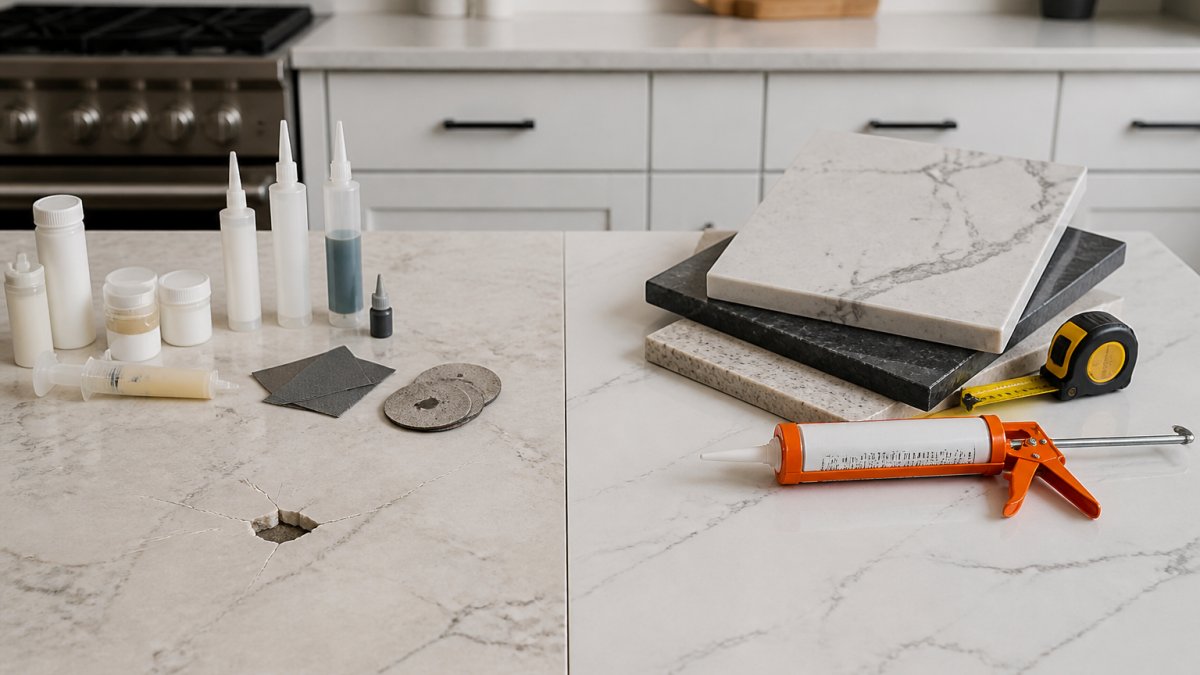
A small chip in granite or quartz exposes the interior stone to moisture, dirt, and bacteria, and over time that opening becomes a crack that spreads into structural damage.
Not every chip needs professional attention, a hairline scratch that doesn't penetrate the sealant can wait. But if damage breaks through the protective layer, exposes raw stone, or shows discoloration at the edges, professional stone chip repair becomes essential, and the longer you wait, the more expensive the fix.
At Major Stone Repairs and Restoration, we've assessed many damaged countertops, and the pattern is often the same: homeowners delay hoping it resolves itself, it never does, and a repair can become a replacement once damage spreads beneath the surface.
Here's what matters most: if you can feel the chip with your fingernail, or if water pools in the damaged area, professional attention is warranted. These are signs the damage has compromised the structural integrity of your stone.
The Stone Chip Repair Process: What Professionals Actually Do
Professional stone chip repair isn't about slapping filler into a hole. It's a multi-step process requiring skill, precision, and the right materials, which is why DIY attempts often make things worse.
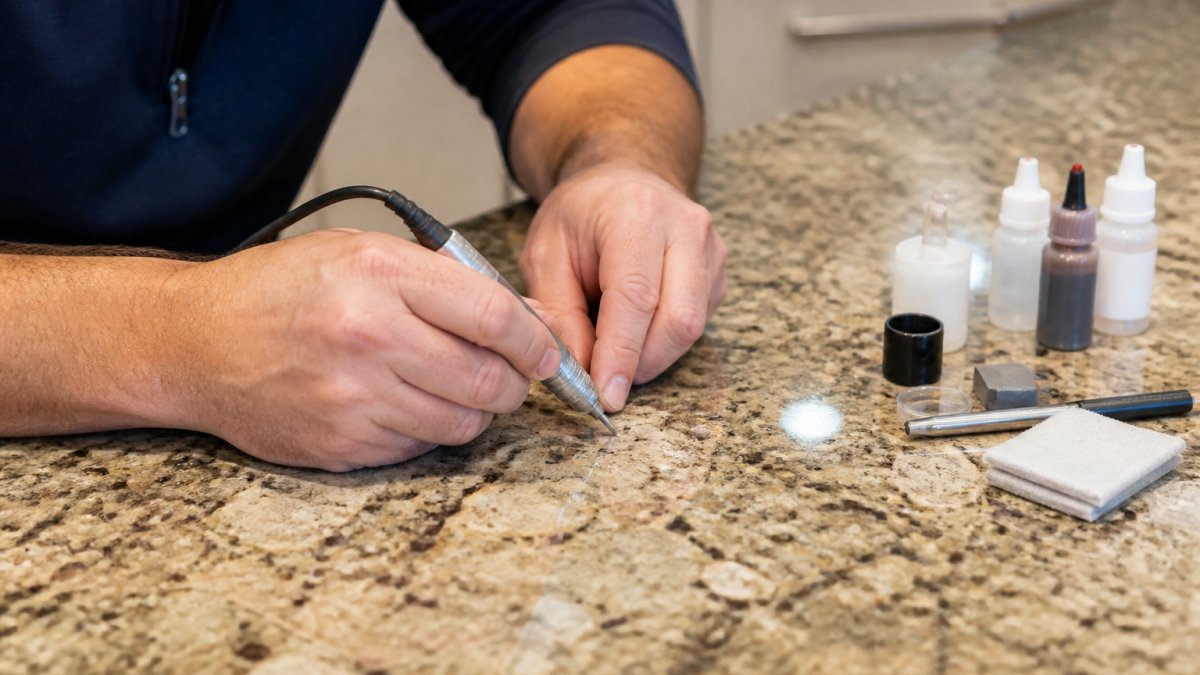
Damage Assessment and Preparation
A technician examines the chip under magnification to gauge its depth and whether the subsurface is affected.
The area is cleaned and loose fragments removed, and chip edges are checked for stability or shaped for a clean repair boundary, preparation that determines whether the repair holds or fails within months.
Surrounding stone is masked with tape to keep repair compounds off undamaged surfaces and prevent accidental scratches.
Filling, Leveling, and Color Matching
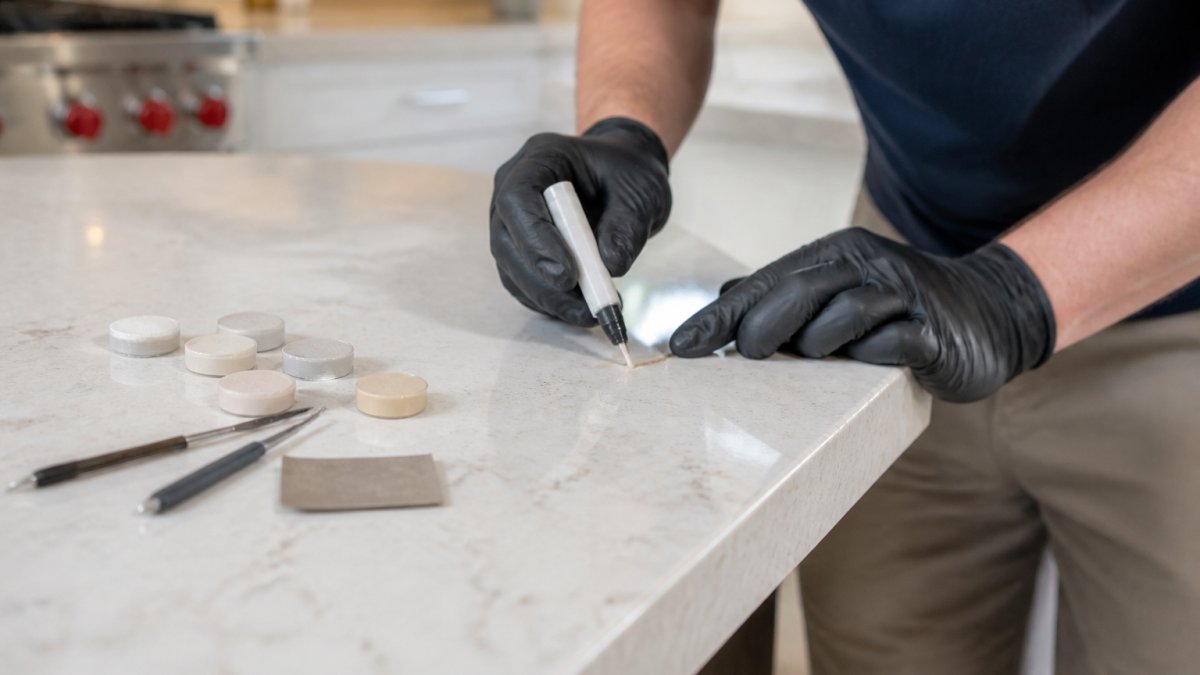
The technician selects a filler matched to your stone type, granite, quartz, marble, and engineered stone each need different materials, and applies it in layers, each partially cured before the next to prevent shrinkage and cracking.
The filler is then leveled with specialized tools until flush with the original stone, with no ridge or depression visible or detectable by touch.
Color matching is the most demanding part: a filler matching the base color can still stand out if the tone is off, so technicians use tinting agents, stains, and layered compounds for an exact match, where experience separates a good repair from an obvious patch.
Finishing and Sealing
The repair is finished to match the surrounding texture, polished, honed, or leathered, so it blends seamlessly.
A protective sealant is then applied, protecting both the repair and surrounding stone from moisture, staining, and further damage, many stone chip repair jobs fail because this step is skipped or done poorly.
Stone Countertop Chip Repair vs. DIY Kits: Which Is Right for You
DIY stone chip repair kits are inexpensive and a reasonable stopgap for a narrow set of damage, but for most visible damage on a valuable countertop they're a false economy. The useful question is which damage falls on which side of the line.
A decision framework based on four factors
Chip size. A chip smaller than a pencil eraser in a low-visibility area is the best DIY candidate; larger chips need layered filler and careful leveling, where DIY results most often fail.
Depth. A chip that stays in the surface layer without exposing raw stone can take a temporary DIY fill.
Desired finish. If the repair must disappear under close inspection, DIY is the wrong tool; if you just need the chip sealed against moisture and can accept a visible patch, a DIY kit can serve.
What typically goes wrong with DIY kits
Most DIY failures follow a predictable pattern: filler shrinks as it cures, leaving a light-catching depression; the color match is close but off under normal lighting because the kit's tint range is limited; the repair is brittle and cracks under use; or filler spreads onto undamaged stone and must be removed.
The underlying reason is equipment and skill: color matching needs multiple tinting compounds and experience reading color under different light, leveling needs controlled abrasion so the repair ends flush without scratching, and matching a polished, honed, or leathered texture takes years to master.
When DIY is the right call
Choose DIY when the chip is small, shallow, in a low-visibility location, and you mainly want to seal it against moisture until a professional can look at it. Treat it as temporary, not permanent.
Choose professional repair when the chip is visible, deep, on a valuable surface, or must blend under normal lighting, and when it's part of a larger pattern of damage, since a technician can assess for subsurface cracking.
The middle path
If cost is the concern, ask whether a functional repair with a simpler finish is available for low-visibility damage, often less than a full cosmetic repair and far less than a failed DIY attempt followed by a professional correction.
Stone Repair Cost: What Affects Your Price and How to Budget
Stone repair pricing is a range shaped by the damage, the stone, the finish, and the service model. Understanding those drivers helps you compare quotes fairly and budget without sticker shock.
The five cost drivers that matter most
**1.
2. Depth and whether the damage reaches the substrate. A surface chip in the clear coat or glaze is a fill-and-finish job. A chip exposing raw stone, or spider-cracking into the surrounding surface, requires stabilization before filling.
**3.
4. Finish type. A polished surface must be polished back to the same gloss after filling, and honed, leathered, and brushed finishes each need a different sequence.
5. Location and access. A chip on an open countertop run is straightforward. One tight to a backsplash, under an overhang, or around a sink cutout requires masking and careful tool control, adding time.
How to read a quote
Ask for the quote broken into four lines, assessment, materials, labor, and finishing/sealing, since a lump sum is harder to compare. Ask whether the price includes sealant and a return visit if the repair doesn't cure correctly.
Budgeting realistically
Treat the repair as a preservation cost, not a cosmetic one. A correctly sealed repair protects the surrounding stone from moisture and staining.
For low-visibility damage, such as a back edge or under-cabinet run, ask whether a functional repair with a simpler finish is available at a lower price, many professionals offer it, and it's a reasonable trade-off when appearance isn't the priority.
For a specific estimate, request an on-site assessment. A technician who evaluates the chip in person, under your lighting, can give a firm price rather than a phone estimate that changes once the damage is seen up close.
Choosing a Stone Countertop Repair Specialist
Not all stone repair services are equal. Some technicians have years of experience and proper equipment; others are handymen with a few DIY kits. The difference in results is dramatic.
When evaluating a stone countertop repair specialist, look for several key indicators of quality. Experience matters, technicians with years in the industry have seen every type of damage and know how to handle edge cases. Certifications and accreditations signal that the technician has met industry standards.
Mobile service is a practical advantage: on-site repairs eliminate transport damage risk and let the technician assess your countertop under your lighting, which matters for color matching and finish work.
Questions to Ask Before You Hire
Before hiring any stone repair specialist, ask these questions:
How many years of experience do you have with stone chip repair?
Can you show examples of previous repairs? Reputable specialists have photo portfolios, and you should see repairs that blend seamlessly with the surrounding stone.
What materials and techniques do you use? Ask specifically about filler compounds, color-matching methods, and finishing processes. Vague answers suggest limited expertise.
Do you offer a warranty on the repair? Responsible specialists stand behind their work. A warranty indicates confidence in the repair's durability.
How long will the repair take? Most chip repairs take a few hours to a full day depending on complexity; be skeptical of a promised 30-minute repair on significant damage.
What Warranties and Guarantees Should Cover
A solid warranty should cover the repair itself, the filler holds, doesn't shrink, and doesn't crack under normal use, plus color stability, ensuring the repair doesn't discolor or fade over time.
The warranty period depends on repair complexity and the specialist's confidence. Some warranties cover material failure but not misuse damage (like dropping heavy objects on the repair), which is reasonable and standard.
Ask whether the warranty covers sealant protection: if sealant was applied as part of the repair, the warranty should guarantee it performs as intended for a specified period.
Protecting Your Stone: Prevention and Aftercare
Stone chip repair is expensive and time-consuming; prevention is far simpler. Here's what protects your countertops.
Use cutting boards.
Avoid thermal shock. Don't place hot pans directly on stone. Use trivets or hot pads.
Clean spills immediately, especially acidic substances like lemon juice, vinegar, or wine, which can etch stone and weaken the sealant.
Seal your stone regularly.
Use coasters under glasses and bottles. Water rings aren't just unsightly, they indicate moisture penetration, which weakens the stone over time.
Avoid abrasive cleaners and scrubbing pads. These can scratch the surface and wear down the sealant.
After a professional repair, follow the technician's aftercare instructions.
Repair Limitations and Realistic Expectations
Professional stone chip repair is remarkably effective but has limits; understanding them helps you decide between repair and replacement.
A repair can make damage invisible to the eye, but close inspection under strong light may still reveal the repair line, especially on highly visible countertop sections.
Very large chips or multiple damage areas in close proximity may not be repairable.
Repairs on heavily used commercial countertops may not hold as long as those in residential kitchens, since constant impact and stress can cause repairs to fail faster than expected.
Frequently Asked Questions
How much should a stone chip repair cost?
Stone repair pricing depends on the chip's size, depth, location, and the stone type (granite, quartz, marble). The scope of damage, mobile service fees, color-matching complexity, and sealing requirements also affect the total. Contact a local stone countertop repair specialist for a free estimate, since pricing varies by service area and damage severity.
Can a chipped stone countertop be repaired without replacing it?
Yes. Most chips and minor damage can be repaired professionally without replacing the entire surface. Experienced technicians use specialized filling materials, color matching, and leveling techniques to restore the original appearance. However, very large cracks, extensive damage, or damage that has exposed the stone's interior to moisture and rust may require replacement. A professional assessment determines whether repair is practical for your situation.
How long does professional stone chip repair take?
A single small chip repair typically takes 1-3 hours, depending on access, color-matching requirements, and drying time for sealants. Larger repairs or multiple damaged areas may take longer. Many mobile repair specialists schedule appointments to fit your availability. Ask your stone countertop repair specialist about the timeline during your consultation so you can plan accordingly.
What's the difference between professional stone chip repair and DIY repair kits?
Professional repair includes damage assessment, specialized equipment, precise color matching, advanced filling materials, surface leveling, and protective sealing. DIY kits offer temporary solutions for very minor damage but often produce visible repairs, fail to match the original finish, and lack protective sealing. Professional results are more durable, aesthetically superior, and backed by warranties. For visible damage or high-traffic areas, professional repair protects your investment.
Stone chip damage doesn't have to mean replacing your entire countertop. Professional stone chip repair restores your surface and protects your investment. Major Stone Repairs and Restoration brings over 20 years of expertise to every repair, using advanced techniques and DryTreat-certified sealing to ensure lasting results. Get your free estimate today and discover how we can restore your stone to its original beauty.